



From the CEO
AI Won’t Replace SREs. It Will Ask More of Them.
Everyone keeps asking whether AI will kill our industry. I think we’re asking the wrong question.
At A Glance
What every efficiency wave has taught us:
$700B+
public cloud spending a year, and still climbing
600,000
bank tellers after ATMs, up from around 500,000
1,000+
recorded cases of AI causing real-world harm
Why it matters: every wave that made building cheaper made operating harder. AI is making software dramatically cheaper to build.
The move: treat AI as leverage and own what it leaves behind: the judgment, the guardrails, and the outcome when something breaks.
I keep hearing the same fear lately, just in different words. Will AI take my job? Will it make what I do irrelevant? Did I spend a career building a skill a couple prompts can replace?
Where I’m coming from:
I understand the fear. I’ve felt this before. When something I had built came to a sudden end. I was sure the story was over.
What I’ve learned, is that it was never really the end. More often, it was the start of something different and eventually something better. I think that’s what’s happening in our industry again.
We always do more when it gets easier
Have you ever noticed that when something becomes less expensive or easier, we end up using it more?
It’s called Jevons paradox. More efficient steam engines didn’t burn less coal; they burned more, because cheap power found a thousand new uses. In January 2025, Satya Nadella said it plainly about AI.
AI is making software dramatically cheaper to build. So we’ll build more of it, not less. At SREcon this year, Google’s Michelle Brush made the same point from the reliability side: as AI writes more of our code, it multiplies the complexity we have to operate, and humans stay essential in order to tame it.
More apps, more features, more attacks, more frequent updates isn’t a smaller problem, it’s a bigger operational one.
Jevons paradox strikes again.
Satya Nadella, January 2025
We’ve seen this movie before
If this feels familiar, it should. We’ve lived multiple versions of it already.
Personal computersThe internetMobile computeThe cloudSaaSVirtualizationContainerizationCI/CD
01
The promise
Every wave arrived with the same promise that some jobs were about to vanish. Each time, the world was wrong about what would disappear and at what speed the transition was going to happen. Fifteen years ago, the wave was cloud. Industry analysts even gave it a name, NoOps, and predicted developers would never have to talk to an operations person again.
02
What happened
Here’s what actually happened. We didn’t operate less. We operated far more. The cloud era didn’t end operations; it created whole new disciplines to handle the new complexity: DevOps, SRE, platform engineering, DataOps, even FinOps to wrestle the bills back down.
03
Older than cloud
This is way older than cloud. When ATMs spread in the 1970s, everyone was sure bank tellers were finished. Instead the number of tellers grew, because cheaper branches let banks open more of them. The machine did not erase the job. It changed it, and there was more of it.
$700B+
public cloud spending a year, and still climbing
600,000
bank tellers after ATMs, up from around 500,000
The people who assumed the work had vanished got buried by it. The people who owned the new complexity built the companies and careers during the past decade. That’s the lesson I’m carrying into this AI wave. Not skepticism. Just history.
The easy part leaves. The hard part stays.
Back in 1983, a researcher named Lisanne Bainbridge wrote something that has stuck with me. She called it the ironies of automation.
by taking away the easy parts of his task, automation can make the difficult parts of the human operator’s task more difficult.
Lisanne Bainbridge, Ironies of Automation, 1983
Her insight: when you automate the easy parts of a job, what’s left for the human is the hard part, the judgment you can’t reduce to a rule.
There’s a quieter danger underneath that one. When we stop doing the routine work, the skill fades. You don’t keep an ability by reading about it. You keep it by using it. That’s true at the gym working out and at 3 am when the apps are down and someone has to actually understand it.
Those are the reps that matters now.
The work moves up, it doesn’t move out
↓ Less time
typing the code and running the commands.
↑ More time
deciding what’s right, checking what the machine produced, building the guardrails that catch failure before customers feel it, and owning the outcome when something breaks.
None of this is an argument against AI. I’m actually really excited about it. It’s an argument for being honest about what our job will become. Our work moves up to the next level.
We have to build up our own personal context, AI enabled and empowered, to be able to see, to ask and to guide where we apply our new superpowers.
The market already sees it. The old, narrow operator roles are shrinking. And from my experience, the engineers who can comprehend the macro-complexities of whole systems have never been more needed. The work isn’t disappearing. It will demand a lot more from us.
This is a rep, not a threat
I’ve come to believe that obstacles in front of us are just opportunities in disguise. This one is no different.
AI will help the engineers who treat it as leverage and lean into the harder work that it leaves behind. It’ll hurt the ones who refuse to learn to harness it or to use it to outsource their own thinking.
If you’ve spent your career keeping complex things running, working with code you didn’t write, staying level-headed when the inevitable outages come …, then you’ve been training for this exact moment your whole life.
This is not a threat. That’s a calling. It’s a great time to be an SRE.
Steve Kwan, Chief Executive Officer, OpsWerks
Worth reflecting on
Three questions to sit with before the next wave lands on your team.
01
What are you afraid AI will take from you?
02
What if it’s actually handing you the harder, more valuable work?
03
And what’s the one rep you’ve been avoiding?
The AI Outage Haiku
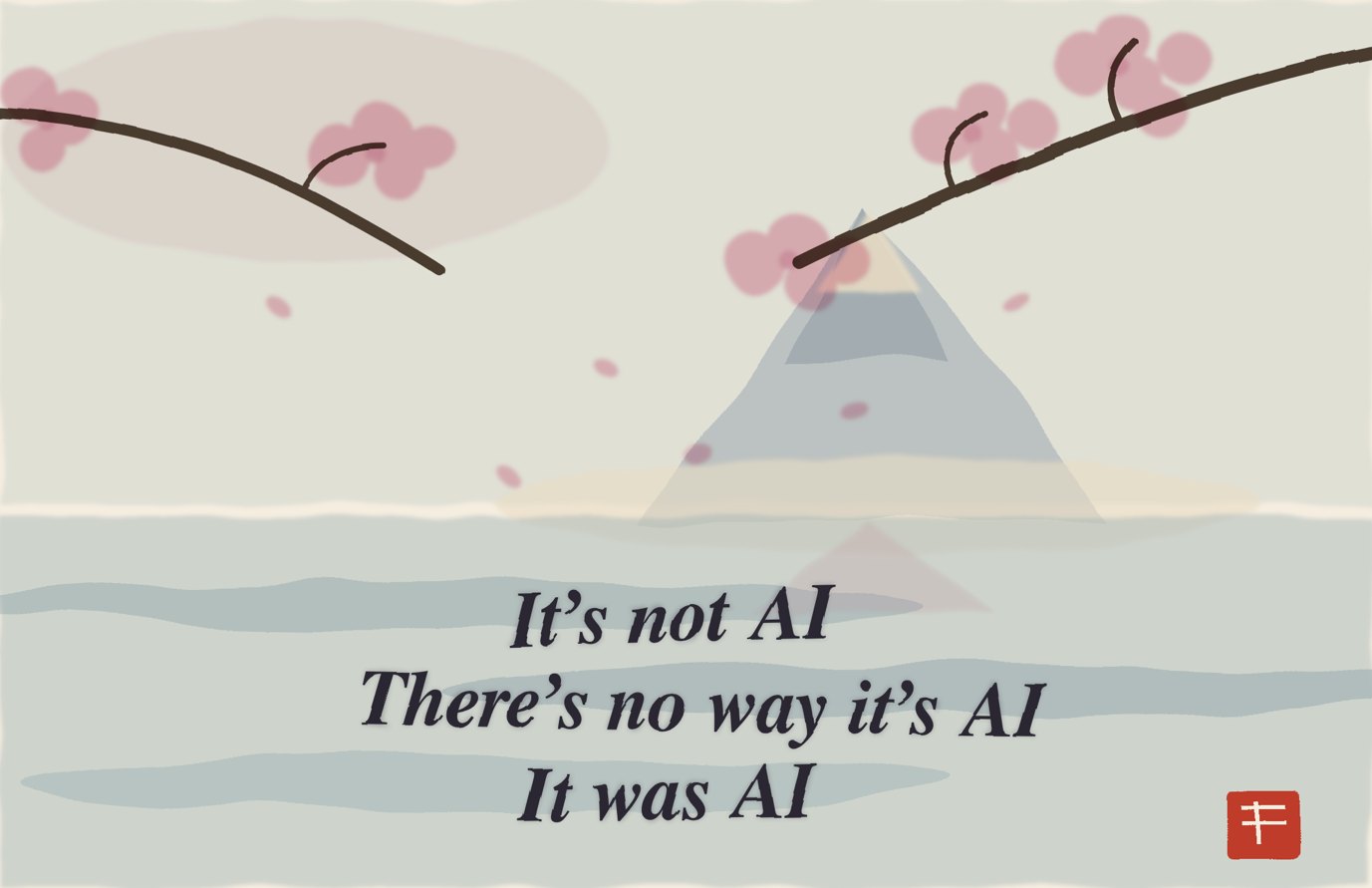

You define the outcomes.
We own the delivery.
OpsWerks owns 24/7 operations for platform and SRE teams, so your engineers spend their time on the work that moves the roadmap.
References
- Michelle Brush, “Taming the Unpredictable: Reliability in Chaos,” SREcon26 Americas. USENIX
- Lisanne Bainbridge, “Ironies of Automation,” Automatica, 1983. Automatica (PDF)
- Satya Nadella on the Jevons paradox, Jan 27, 2025. X
- Mike Gualtieri, “DevOps Is About Collaboration; NoOps Is About Automation,” Forrester, June 29, 2011.
- Worldwide public cloud end-user spending forecast, Gartner, Nov 2024. Gartner
- DORA / Google, 2025 State of AI-Assisted Software Development. Google Cloud
- Veracode, 2025 GenAI Code Security Report. Veracode
- Replit AI coding agent deletes a production database, Fortune, Jul 2025. Fortune
- Amazon retail outages and added human review of AI-assisted changes, Fortune, Mar 2026. Fortune
- Meta cuts roughly 8,000 roles to fund AI spending, NPR, May 2026. NPR
- Mark Zuckerberg on AI agent progress at a Meta town hall, Reuters, July 2026. Reuters
- U.S. Bureau of Labor Statistics, Occupational Outlook Handbook, systems administrator projections. BLS
- James Bessen, bank tellers and ATMs, IMF Finance and Development, 2015. IMF
- AI Incident Database, Responsible AI Collaborative. AI Incident Database